Have you thought about

checking our FAQ ?

Who can benefit from the NFI services?

4 specific cases:
  • Foreign companies in all sectors looking to expand in Hauts-de-France
  • French companies with no site in Hauts-de-France
  • Hauts-de-France companies with a succession plan
  • Foreign-owned companies in Hauts-de-France with a development project
Our services are not intended for :
  • French or international self-employed entrepreneurs
  • French companies wishing to export
  • International companies seeking distribution networks only

Why as the help of Nord France Invest?

Nord France Invest provides you with completely tailored, free of charge and confidential support. We centralize all the information you need to analyze your project. We facilitate your process to find a site, partners or land. We organize site visits. We accelerate your networking with future regional partners. Find out more about the agency's services on this page.

What type of project can support you in?

The agency supports job-creating investment projects. The nature of projects varies according to 3 main categories:
  • Start-up projects
  • Expansion of existing sites in the region
  • takeovers of regional businesses by international companies.
Nord France Invest's services are not aimed at capital investments.
Check the FAQ
Contact

Do you have an expansion project?

Leave us your contact details and we’ll get back to you by e-mail.

This field is for validation purposes and should be left unchanged.
Top !
Homesuccess storiesThe road to carbon – free aluminium

Aluminium Dunkerque:

The road to carbon - free aluminium

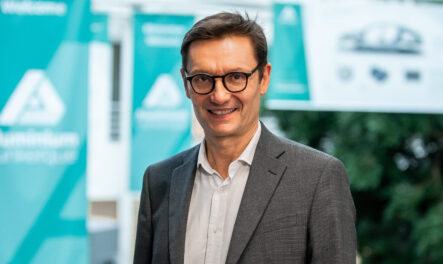
Founded in 1991, Aluminium Dunkerque is France's largest primary aluminum production site and one of the largest in Europe. Guillaume de Goÿs, President of Aluminium Dunkerque, discusses the aluminum industry in the Hauts-de-France region.
Date de publication Published on 04.02.2026
Nord France Invest

Aluminium Dunkerque: innovation, decarbonization
and European leadership

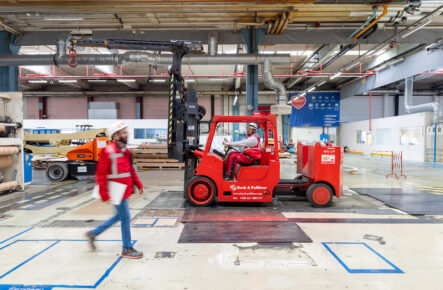
Founded in 1991 as part of a strategy to boost an industrial area that was on the decline, Aluminium Dunkerque now mainly makes high-end alloy plates and ingots for the auto, transportation, and industrial packaging industries.

720 employees, €800 million in revenue, 300,000 tons of aluminum produced, exports to around ten countries… These key figures show the importance of the largest primary aluminum production site in France and one of the largest in Europe.

🔎Discover the advantages of the metallurgical industry in Hauts-de-France.

By committing to “producing low-carbon aluminum in France in a sustainable way in order to promote new modes of consumption and mobility, and shape a world that is more respectful of the planet and its inhabitants,” Aluminium Dunkerque is killing two birds with one stone.

The company stands out in a market led by China. This country—which accounts for 60% of global production—has contributed to a decline in metal prices by developing excess supply. The company, which is located on 65 hectares in the heart of the Grand Port Maritime de Dunkerque, contributes to France’s industrial sovereignty, which now has only two major primary aluminum production sites within its borders (in addition to numerous processing, recycling, and refining sites).

Its decarbonization strategy, which was highlighted in 2025 with the inauguration of its first recycling furnace, earned it the “Best Managed Companies” label awarded by Deloitte France and the National Bank of Canada. Its president, Guillaume de Goÿs, was also named “Best CEO in the Sustainable Metallurgy Industry 2025” by EU Business News for his innovative practices in sustainability and management. A decision-maker with whom we achieved a return on investment…

Is Aluminium Dunkerque
an American or French company?

I would like to emphasize that we are an independent French company with international operations, wholly owned since 2021 by the American investment fund AIP (American Industrial Partners).

We are not the French subsidiary of an American group, but rather a fully-fledged French company. All our operations are based in France, our decision-making center is in France, and our board operates under French law.

This is quite different from the past, when many support services were scattered across Europe and elsewhere. This policy favors local employment. It has also resulted in successful financial results. Since AIP’s arrival, our EBITDA1 has increased approximately by two and a half times, even though we went through the energy crisis during this period and our production remained more or less constant.

1 Key financial indicator used to assess a company’s performance and profitability. This term stands for “earnings before interest, taxes, depreciation, and amortization.”

What is your main activity and what led to the decision to set up
in Dunkirk in the early 1990s?

Our core business is the production of primary aluminum from alumina, our main raw material. In our market, which covers all of Europe, we are the leading industrial site in the European Union and the third largest in Europe if we include Norway and Iceland.

Historically, our production began in 1991 with a strategic location in Dunkirk’s seaport. The main reason for this choice is the presence of the Gravelines nuclear power plant, located a couple of miles from our facilities (~2 miles). However, as we are the largest consumer of electrical energy in France on an industrial site, we needed to optimize this key area for our productivity through negotiated rates. The second key factor was access to a deep-water port since we import 550,000 tons of alumina per year by sea.

🔎 Discover our experts’ advice on finding your ideal location.

Employment trends
at the Port of Dunkirk

Thanks to new projects currently underway or planned for the future (SNF Floerger, Clarebout, Verkor, Prologium, XTC Orano, etc.), the port of Dunkirk expects to create 20,000 additional jobs by 2030.

🔎Recruit easily in Hauts-de-France.

A key issue for Aluminium Dunkerque, whose specific activity requires particular expertise. Given its age pyramid, the company must ensure that the skills of retiring employees are passed on, as well as recruit new employees.

To achieve this, it relies on internal training and collaborations with local vocational high schools and the Université du Littoral Côte d’Opale.

We take part as often as possible in promoting industrial trades that are part of our region’s cultural heritage. In fact, during a job dating event organized in Calais, we welcomed 500 people who submitted their resumes.

What significant investments have you made
in your production facility?

Our facilities are among the most modern in Europe in the primary aluminum manufacturing market. This result is the fruit of our shareholder’s efforts since joining the company in 2021.

We have gone from an annual investment budget of €40 million to nearly €60 million today, which represents an increase of approximately 50%. In particular, the Group has approved a major investment to support our growth. This concerns our new furnace No. 8, which alone required an €13 million investment.

Alongside our seven other furnaces, whose main function is to solidify the liquid metal we produce in primary alloys, this one is dedicated to recycling aluminum waste (see below). For us, this is a major innovation that supports our decarbonization efforts, which are central to our positioning and development.

Additional modernization work is also regularly undertaken at our site. This covers everything from the safety of our facilities and improving working conditions for staff to reducing our energy consumption.

🔎Read our article on decarbonization, an environmental challenge and a factor in competitiveness.

A furnace that recycles
aluminum waste

In 2025, Aluminium Dunkerque inaugurated its No. 8 furnace, the first of its kind at its site. This state-of-the-art facility recycles 7,000 tons of aluminum waste each year, mainly from the automotive, construction, and packaging industries and produces 20,000 tons of recycled aluminum with a low environmental impact.

The furnace uses oxy-fuel burners (running on natural gas and oxygen), which significantly reduces emissions from melting. It also has an internal industrial water recycling system, which prevents excessive water consumption. Thanks to this facility, the site avoids 25,000 tons of CO₂ and saves 96 GWh of electricity per year.

Aluminium Dunkerque received support from local and regional economic stakeholders in obtaining financial assistance. The project received support from the French government through the France 2030 program, European funding through the France Relance plan supported by the Next Generation EU program, and from ADEME. The cumulative intervention rate amounts to 15% of the total investment amount.

What does your positioning in favor of the lowest-carbon aluminum production possible
consist of?

The European Union produces just over 1 million tons of primary aluminum, while consuming five times that amount. It therefore imports a significant amount from outside the EU, which raises questions about France’s and the EU’s industrial sovereignty, as they consider this metal to be strategic for the ecological transition and for our sovereignty.

However, in order to continue producing at an acceptable cost and face international competition, we need both carbon-free energy—our electricity is supplied by nuclear power—and competitive prices. This was the case under a long-term contract signed for 25 years between Péchiney and EDF in 1991.

Next, we benefited from Regulated Access to Historic Nuclear Electricity (ARENH). The main challenge facing Aluminium Dunkerque today, like all primary aluminum production plants, is to secure a competitive long-term carbon-free contract.

Our positioning embraces the future, with the aim of moving towards “green” aluminum. We have obtained the Aluminium Stewardship Initiative label developed by the international industry. This tracks all our actions in terms of our products’ sustainability.

We are also working to become part of a circular economy. This approach also allows us to demonstrate innovation in terms of R&D. We are currently working on a high-purity aluminum project and are interested in a system that would capture CO2 and transport it to storage areas via the port of Dunkirk.

We have launched an innovation initiative in the form of a consortium with a major company in the Hauts-de-France region, Fives, and two other companies in our sector: Rio Tinto and Trimet France. The goal is to develop a decarbonization solution for the aluminum industry based on CO capture.

Impact study of foreign companies
in Hauts-de-France

  • Why do international companies set up subsidiaries or production units in Hauts-de-France?
  • What do these sites bring to their group and vice versa?
  • What were the main criteria for choosing to set up here?
  • How do these structures recruit and train qualified staff?

👉Find out what foreign investors who have found their gem in our region have to say!

This interview is taken from our discussions with Guillaume de Goÿs, President of Aluminium Dunkerque, as part of the KPMG – NFI 2025 impact study.

🔎Read the 2025 study.

DO YOU HAVE A DEVELOPMENT PROJECT IN THE HAUTS-DE-FRANCE REGION?
OUR EXPERTS ARE HERE TO HELP YOU

Sophie Sophie
Eddy Eddy

Sophie and Eddy are your dedicated contacts in the industrial sector. They will take charge of your project, provide you with all the necessary information, help you find the right location solutions, and much more.

Contact them, describe your needs, and they will start assisting you as soon as possible!

This field is for validation purposes and should be left unchanged.

Discover other
success-stories about

TG GRISET: A historic industrial business
Industry
Interview

TG GRISET: A historic industrial business

Founded in 1760 in Hauts-de-France, Griset is one of the country’s last copper producers. In 2016, China’s TNMG took over this industrial flagship. Far from the cliché of technological plundering, the operation enabled the company to rise from the ashes. Discover the story of this takeover as told by Dunwei Liu, Deputy General Manager. An interview from the 2025 impact […]
12-2025
Read more
Return on investment MySoda
Agrifood
Interview

Return on investment MySoda

At the end of 2019, MySoda wanted to break into the French market for carbonation machines. In just four months, the Finnish company chose to set up shop in Comines, in the midst of the COVID-19 pandemic. Five years later, what has been the group’s return on investment in the Hauts-de-France region?
12-2025
Read more
McCain: a global company with local roots
Agrifood
Interview

McCain: a global company with local roots

In 1981, McCain opened its first site in Hauts-de-France. Forty years later, they employ 880 people and are investing an additional €300 million in the region. Maxime Debrye, Director of the Harnes site, looks back on this wonderful love story between Hauts-de-France and the Canadian French fry giant. An interview from the impact study of foreign companies in Hauts-de-France 2025, […]
11-2025
Read more
Enchem sets up electrolyte plant in Hauts-de-France
Battery
Interview

Enchem sets up electrolyte plant in Hauts-de-France

Korean giant Enchem, a specialist in electrolytes for lithium-ion batteries, confirms its foothold in Europe. Already present in Korea, China, the United States, Hungary and Poland, the manufacturer has chosen Hauts-de-France to strengthen its proximity to its European customers. As a key player in next-generation electric mobility, Enchem combines sustainable growth and technological innovation in a strategic, fast-changing market.
07-2025
Read more
ORANO Med sets up in Valenciennes
Health
Interview

ORANO Med sets up in Valenciennes

Orano Med, an Orano subsidiary specializing in nuclear medicine, sets up a state-of-the-art laboratory in Valenciennes dedicated to targeted alpha therapy. What are the industrial and medical stakes behind the strategic choice of Hauts-de-France? Exclusive interview with Guillaume Porche, Head of Manufacturing and Performance.
07-2025
Read more
Mellow, growth without borders
Agrifood
Interview

Mellow, growth without borders

Mellow is the result of the merger between two Belgian family-owned companies in 2022: Dessert Factory in Liège and Verbau in Hainaut. Present on the ‘premium’ refrigerated desserts market, the company, which has 250 employees, aimed for €100 million in revenue in 2024 thanks to their combined strengths. In addition to its two long-standing sites in Belgium, Mellow has a […]
07-2025
Read more