Have you thought about

checking our FAQ ?

Who can benefit from the NFI services?

4 specific cases:
  • Foreign companies in all sectors looking to expand in Hauts-de-France
  • French companies with no site in Hauts-de-France
  • Hauts-de-France companies with a succession plan
  • Foreign-owned companies in Hauts-de-France with a development project
Our services are not intended for :
  • French or international self-employed entrepreneurs
  • French companies wishing to export
  • International companies seeking distribution networks only

Why as the help of Nord France Invest?

Nord France Invest provides you with completely tailored, free of charge and confidential support. We centralize all the information you need to analyze your project. We facilitate your process to find a site, partners or land. We organize site visits. We accelerate your networking with future regional partners. Find out more about the agency's services on this page.

What type of project can support you in?

The agency supports job-creating investment projects. The nature of projects varies according to 3 main categories:
  • Start-up projects
  • Expansion of existing sites in the region
  • takeovers of regional businesses by international companies.
Nord France Invest's services are not aimed at capital investments.
Check the FAQ
Contact

Do you have an expansion project?

Leave us your contact details and we’ll get back to you by e-mail.

This field is for validation purposes and should be left unchanged.
Top !
Home»success stories»McCain: a global company with local roots

McCain: a global company

with local roots

In 1981, McCain opened its first site in Hauts-de-France. Forty years later, they employ 880 people and are investing an additional €300 million in the region. Maxime Debrye, Director of the Harnes site, looks back on this wonderful love story between Hauts-de-France and the Canadian French fry giant. An interview from the impact study of foreign companies in Hauts-de-France 2025, conducted by Nord France Invest and KPMG.
Date de publication Published on 14.11.2025
Nord France Invest

A major player in the agri-food industry
engaged in the Hauts-de-France region

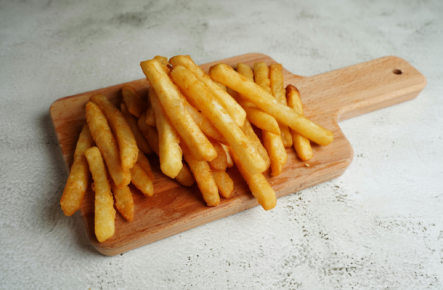
Founded in 1957 in Canada by the two McCain brothers, this family business has become a world leader in the processing and distribution of frozen potato products (mainly French fries).

It has kept its family roots despite its global expansion, with a presence in over 160 countries.

The Canadian group has been present in France for over 40 years, with its first production site established in Harnes in 1981.

McCain in numbers

  • 1981 Year of establishment
  • 880 collaborators in the region
  • 260,000 tons produced at the Harnes site

It employs 22,000 people worldwide, including around 1,000 in France between its European office and R&D center in Villeneuve d’Ascq (59) and its three production sites: Harnes (62), Béthune (62) and Matougues (51).

Based in the Hauts-de-France region for over 40 years, McCain produces over one frozen French fry out of four consumed in France and draws on local momentum.

The company works with a network of 800 French farmers and has developed long-term relationships with them based on a short supply chain approach.

The group is constantly seeking synergies with local players with a view to continuously improving its processes.

McCain is therefore planning to invest over €300 million to strengthen its sites’ competitiveness and improve their environmental footprint while continuing its transition to regenerative agriculture.

These are just some of the topics discussed with Maxime Debrye, director of the McCain plant in Harnes.

Why did McCain move to northern France
in 1981 ?

The McCain brothers logically chose to set up shop in France, which is our main market in Europe.

They selected a region known for its potato production. This is why two of our three sites are located in the Hauts-de-France region.

🔎 Discover the strengths of the agri-food sector in Hauts-de-France.

We have always prioritized short supply chains with the farmers we work with. Our farmers are located on average within a 150 km radius of our factories.

The Hauts-de-France region’s industrial heritage was also an important factor, with the founders rightly believing that it was conducive to successful development thanks to its high-quality workforce.

How would you describe the management style
of a Canadian family-owned group such as yours?

This strong sense of family is reflected in how we operate and how we interact within the group. The fact that our exchanges are direct and straightforward—regardless of the teams’ hierarchical levels—reinforces this dimension.

This dimension also contributes to each individual’s ownership of the collective project. This internal proximity goes hand in hand with external proximity.

Unlike other groups, we have chosen to have around fifty production sites around the world, which has a significant impact on the local ecosystem and the communities around us.

There is a relationship to work and industry among employees in the Hauts-de-France region that cannot be found elsewhere and which is due to the region’s history.

How does this strategy impact the farmers
you work with?

This local approach is essential for our 800 partner farmers in France, 70% of whom are located in the Hauts-de-France region.

We have established a long-term partnership with them. We help them make their soil more resilient through regenerative farming practices.

Already, more than half of them are following us in this approach, with the goal of ensuring that all land used for McCain’s production is involved in this transition by 2030.

These practices provide soil that is more resistant to water stress, thereby producing high-quality potatoes.

The goal is also to ensure the long-term viability of our farmers. This is why our agronomists are working with them on future potato varieties that will be able to adapt to climate change in 10-15 years’ time.

My father was a farmer, so I am particularly sensitive to this issue.

How has your landmark site in Harnes evolved
over its 40+ years of existence?

The Harnes site is the largest of our production sites in the Hauts-de-France region. It produces around 260,000 tons per year for both the French market and exports.

🔎Discover how Hauts-de-France can become the springboard for your international development.

Originally, it housed only one production line, before a second one was added a few years later. In 2017, we increased our production line capacity.

We are now rolling out a major new investment plan called “Zenith,” in two phases, which will total more than approximately €300 million over three to five years. This should enable us to increase our production capacity as well as modernize our infrastructure.

This concerns both our equipment (new sorting station, storage, packaging) and our employees’ working conditions (new offices, changing rooms, canteens, etc.).

Do these investments include
an environmental component?

We are now working towards achieving 100% recovery of our food waste.

The modernization of our sites also involves the complete digitization of our work organization, with paper having almost entirely disappeared.

We are also considering new measures to minimize our heat production and use electricity rather than natural gas in order to further reduce our impact.

The second phase of our investment plan should enable us to reduce our water consumption per ton produced on site by 30% thanks to a treated wastewater reuse system (REUT)1 at our wastewater treatment plant outlet.

We have also optimized our supply and distribution logistics chains, based on a short-chain approach, thanks to the proximity of our farmers.

Overall, our goal is to make investments that have a positive impact on the environment.

1 REUT refers to the “secondary use” of treated wastewater, with the water quality level required for this new use, as defined by regulations.

We are preparing for the future by working hand in hand in the field with our agronomists and farmers. In particular, we are studying potato varieties that will produce good yields in the future and will be adapted to climate change.

Are you receiving support
for your ambitious investment project?

A local project support committee (CLAP) has been set up with the various administrative authorities concerned: sub-prefecture, DREAL, ADEME, etc. This body makes it possible to regularly review the project’s progress, facilitate interactions, and resolve certain issues more quickly.

All stakeholders are working together to support the completion of this investment, from the local town hall to Business France at the national level. We have always forged close and sincere relationships with our partners.

Whenever possible, we prioritize synergies with local stakeholders, from schools for our recruitment to local and regional startups and businesses.

And this starts with projects carried out with neighboring companies that are located next to us in our industrial park.

🔎 Discover our confidential and free services.

So a local approach is perfectly compatible
with international processes?

We do indeed have food safety standards and quality objectives that apply internationally, as we must ensure the consistency of our products worldwide.

A consumer or customer should not be able to taste the difference between a McCain product from Harnes and the same product made in Florenceville, our original site in Canada.

On the other hand, our French employees are proud that the McCain products they sell are made from French potatoes that are processed in France.

In addition, we are home to the McCain Europe R&D center here in Hauts-de-France. Innovations are created here and benefit the entire group.

This global approach is based on strong roots in a region whose values we share, in terms of trust, authenticity, and family spirit.

Our company is appreciated by its employees and various stakeholders because we act locally.

Impact study of foreign companies
in Hauts-de-France

Why do international companies set up subsidiaries or production units in Hauts-de-France? What do these sites bring to their group and vice versa? What were the main criteria for choosing to set up here? How do these structures recruit and train qualified staff? Find out what foreign investors who have found their gem in our region have to say!

This interview is taken from our discussions as part of the KPMG – NFI 2025 impact study.

🔎Discover the 2025 study.

Potato
farming

Among the criteria that determine whether a national or international company will set up in Hauts-de-France, the importance of its ecosystem is not sufficiently emphasized.

“All the key players that are essential to the smooth running of our business are close to us: farmers, equipment manufacturers, suppliers, and employees,” explained Maxime Debrye.

🔎Become part of a dynamic international ecosystem.

The director of the McCain plant in Harnes also mentioned a geographical area and local potato production that are essential to the business’s development.

This is an asset for the company, which has been particularly successful in retaining its employees, many of whom are long-serving and have spent their entire careers at McCain. In order to ensure that its employees develop their skills, adapt to increasingly high-tech equipment, and ensure the transfer of know-how between generations, this most French of Canadian companies in our region devoted 7,800 hours in 2024 to continuing education for its staff in Harnes.

DO YOU HAVE A DEVELOPMENT PROJECT IN THE HAUTS-DE-FRANCE REGION?
OUR EXPERTS ARE HERE TO HELP YOU

Dorothée Dorothée
Rémi Rémi

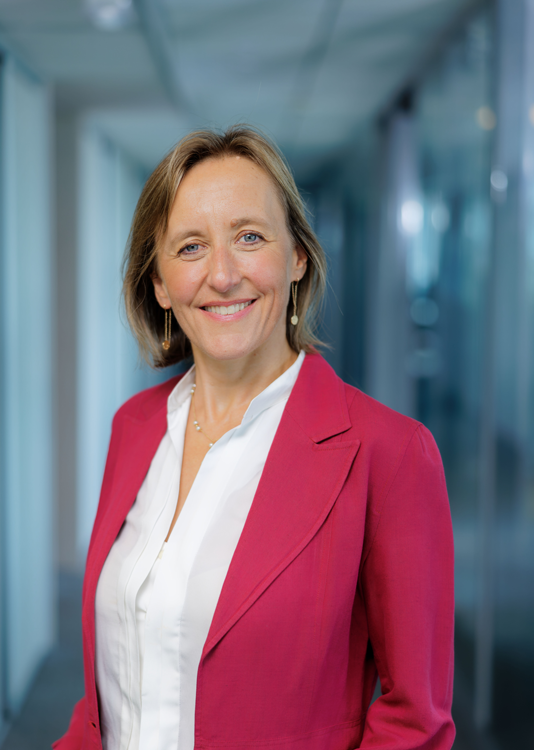
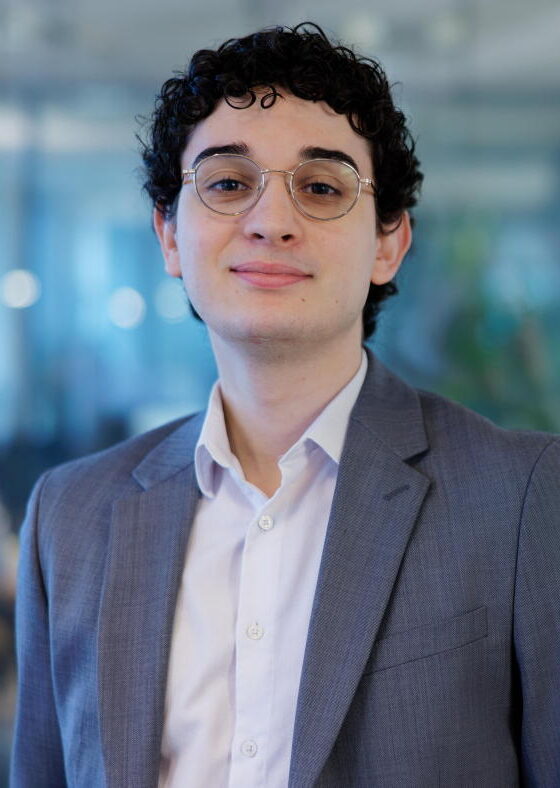
Dorothée (Project Director) and Rémi (Project Manager) are your privileged contacts for any project relating to the food industry.

They will be happy to provide you with support throughout your development project in the Hauts-de-France region.

This field is for validation purposes and should be left unchanged.

Discover other
success-stories about

Sama Aero sets up its aircraft engine recycling workshop in Nogent-sur-Oise
Aerospace
Interview

Sama Aero sets up its aircraft engine recycling workshop in Nogent-sur-Oise

Sama Aero is a young company specializing in the management, storage and recycling of aircraft engines. It has chosen Nogent-sur-Oise, in the Hauts-de-France Region, as the location for its first operational workshop. Thibault Daboux, founder of Sama Aero, explains why he decided to base the company in the Hauts-de-France Region.
03-2026
Read more
The road to carbon – free aluminium
Industry
Interview

The road to carbon – free aluminium

Founded in 1991, Aluminium Dunkerque is France’s largest primary aluminum production site and one of the largest in Europe. Guillaume de Goÿs, President of Aluminium Dunkerque, discusses the aluminum industry in the Hauts-de-France region.
02-2026
Read more
TG GRISET: A historic industrial business
Industry
Interview

TG GRISET: A historic industrial business

Founded in 1760 in Hauts-de-France, Griset is one of the country’s last copper producers. In 2016, China’s TNMG took over this industrial flagship. Far from the cliché of technological plundering, the operation enabled the company to rise from the ashes. Discover the story of this takeover as told by Dunwei Liu, Deputy General Manager. An interview from the 2025 impact […]
12-2025
Read more
Return on investment MySoda
Agrifood
Interview

Return on investment MySoda

At the end of 2019, MySoda wanted to break into the French market for carbonation machines. In just four months, the Finnish company chose to set up shop in Comines, in the midst of the COVID-19 pandemic. Five years later, what has been the group’s return on investment in the Hauts-de-France region?
12-2025
Read more
Enchem sets up electrolyte plant in Hauts-de-France
Battery
Interview

Enchem sets up electrolyte plant in Hauts-de-France

Korean giant Enchem, a specialist in electrolytes for lithium-ion batteries, confirms its foothold in Europe. Already present in Korea, China, the United States, Hungary and Poland, the manufacturer has chosen Hauts-de-France to strengthen its proximity to its European customers. As a key player in next-generation electric mobility, Enchem combines sustainable growth and technological innovation in a strategic, fast-changing market.
07-2025
Read more
ORANO Med sets up in Valenciennes
Health
Interview

ORANO Med sets up in Valenciennes

Orano Med, an Orano subsidiary specializing in nuclear medicine, sets up a state-of-the-art laboratory in Valenciennes dedicated to targeted alpha therapy. What are the industrial and medical stakes behind the strategic choice of Hauts-de-France? Exclusive interview with Guillaume Porche, Head of Manufacturing and Performance.
07-2025
Read more