Have you thought about

checking our FAQ ?

Who can benefit from the NFI services?

4 specific cases:
  • Foreign companies in all sectors looking to expand in Hauts-de-France
  • French companies with no site in Hauts-de-France
  • Hauts-de-France companies with a succession plan
  • Foreign-owned companies in Hauts-de-France with a development project
Our services are not intended for :
  • French or international self-employed entrepreneurs
  • French companies wishing to export
  • International companies seeking distribution networks only

Why as the help of Nord France Invest?

Nord France Invest provides you with completely tailored, free of charge and confidential support. We centralize all the information you need to analyze your project. We facilitate your process to find a site, partners or land. We organize site visits. We accelerate your networking with future regional partners. Find out more about the agency's services on this page.

What type of project can support you in?

The agency supports job-creating investment projects. The nature of projects varies according to 3 main categories:
  • Start-up projects
  • Expansion of existing sites in the region
  • takeovers of regional businesses by international companies.
Nord France Invest's services are not aimed at capital investments.
Check the FAQ
Contact

Do you have an expansion project?

Leave us your contact details and we’ll get back to you by e-mail.

This field is for validation purposes and should be left unchanged.
Top !
Home»success stories»A healthy dose of success for AstraZeneca in Dunkirk

A healthy dose of success for AstraZeneca

in Dunkirk

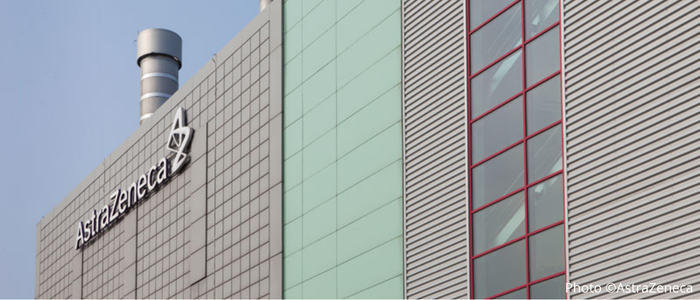
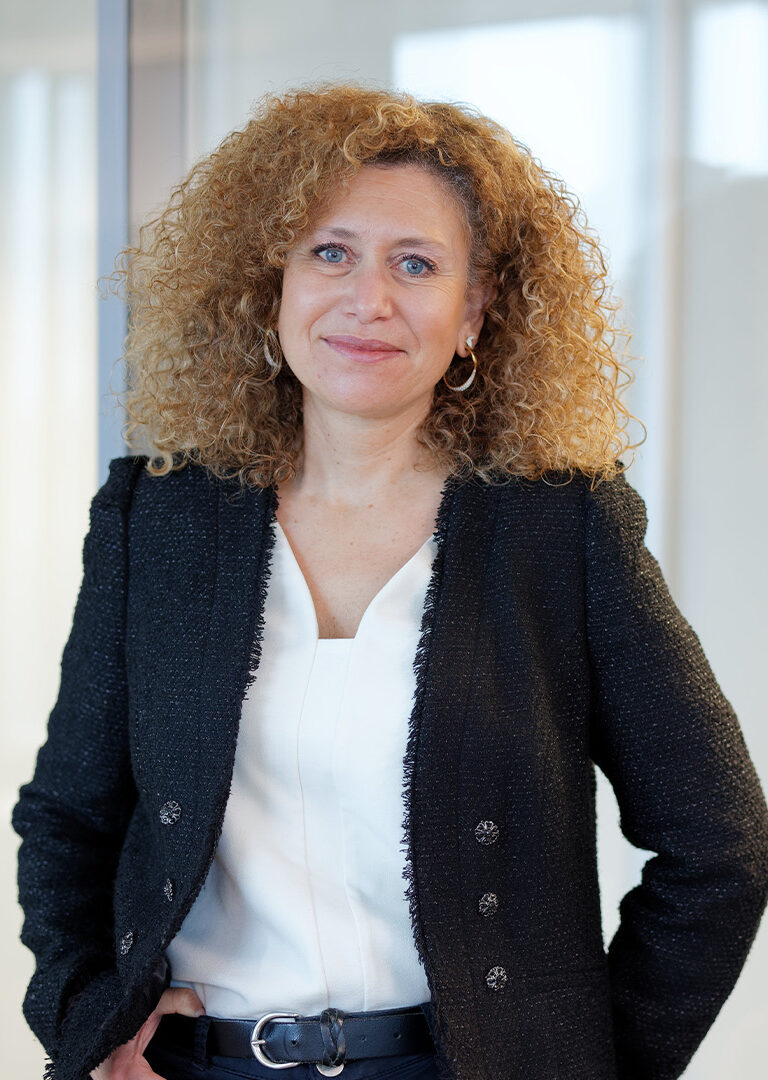
Established in the Hauts-de-France region since 1990, the Anglo-Swedish group continues to grow. Welha Ziri, Site Director, looks back at more than 35 years of presence in the region and the Dunkirk site’s rise to become a global benchmark for the Group.
Date de publication Published on 23.11.2026
Nord France Invest

Formed in 1999 through the merger of Swedish company Astra and British company Zeneca, AstraZeneca is a biopharmaceutical group specializing in research and development, as well as in the manufacturing and marketing of innovative medicines for people with cancer, chronic conditions and rare diseases.

Science-driven and operating in more than 100 countries, the Group employs over 96,000 people worldwide. Its French operations include a production plant in Dunkirk, established in 1990. Today, the site employs 800 people and has become the Group’s global center of excellence for the manufacture of inhaled treatments for respiratory diseases. We spoke with Welha Ziri, Director of the Dunkirk site.

What is the history of
AstraZeneca’s Dunkirk site?

The plant was built on the Petite-Synthe site in 1990, as part of the region’s industrial revitalization efforts. Economic support from local and regional authorities, together with the presence of a major European seaport, were the main factors that led our leadership at that time to choose this location.

🔎Find your ideal location among more than 200 regional listings in our land and real estate catalog

©Samuel Dhote

What types of pharmaceutical products
do you manufacture?

The Dunkirk plant specializes in inhaled medicines for respiratory diseases, in the form of pressurized metered-dose inhalers. In particular, we manufacture several flagship treatments for asthma and COPD – chronic obstructive pulmonary disease – a condition that persistently obstructs the airways and makes it progressively harder to breathe out. Over the years, we have expanded our product range, and today we manufacture four inhaled treatments, available in more than 300 product presentations in total, shipped throughout the world.

🔎Discover the strengths of the healthcare sector in Hauts-de-France

Five million patients worldwide are now receiving treatments manufactured in Dunkirk.

©AstraZeneca

What are the key figures
for your Dunkirk site?

Our plant currently employs 800 people. Within AstraZeneca’s global network, our site is medium-sized, but its role is of major strategic importance to the Group.

We are currently the Group’s only site specializing in the manufacture of inhaled medicines, a rapidly growing market. Our revenue has doubled in four years, rising from €1 billion in 2020 to €2 billion in 2024, 99% of which comes from export sales to more than 75 countries.

Since 2020, €600 million has been invested in the AstraZeneca Dunkirk site, and more than 200 employees have joined our teams, bringing our total workforce to nearly 800 today.

©AstraZeneca - Charles Abbott

What challenges
are you currently facing?

Our main challenge concerns the modernization of our supply chain, which follows an initial investment phase of €135 million, completed in 2020. These investments focused on increasing formulation capacity, as well as upgrading infrastructure and equipment, particularly in our laboratory and quality control facilities.

Since 2020, we have launched an additional investment program totaling over €600 million.

We plan to build a total of five new facilities, including an automated warehouse with capacity for 14,000 pallets, and two new assembly and packaging lines, with operations set to begin in 2026. Our new parking lot has been completed, and other construction work is underway with full completion of the program scheduled for 2028.

Are these major investments
also creating new jobs?

Since 2023, we have hired more than 200 employees at the site, and further recruitment is planned to support its continued expansion.

🔎Hire employees easily in the Hauts-de-France region

Our production volumes are steadily increasing, with output rising from 31 million units in 2020 to 65 million in 2025. Our target is to reach production capacity of 100 million units, enabling more than 20 million patients worldwide to benefit from treatments manufactured in Dunkirk.

©AstraZeneca

Did the French administrative ecosystem help you
make these investments a reality?

Our project was ambitious, but we received support from a range of public agencies and authorities, including Dunkirk Urban Community and the Regional Directorate for the Environment, Planning and Housing (DREAL).

Personally, I arrived in Dunkirk in 2018, and have witnessed a strong buildup of momentum that is helping to attract and retain talent in our region. This is a key issue for AstraZeneca because, despite recruiting primarily within the region, some positions – particularly in management and quality – require us to attract candidates from other parts of France and abroad.

I feel that all the local stakeholders have joined forces to develop local industry and support project developers.

You have also launched a major initiative to decarbonize your operations.
What did that entail?

In 2020, the Dunkirk plant accounted for 20% of the Group’s greenhouse gas emissions. There was a paradox in the fact that we were manufacturing medicines to treat asthma and COPD while our own operations were generating emissions that contribute to air pollution – a factor that can exacerbate respiratory diseases. Against this backdrop, our CEO announced the launch of our “Ambition Zero Carbon” program. Since 2020, this program has enabled us to reduce carbon emissions from our manufacturing processes by 96%.

These results are the outcome of a wide range of initiatives: reducing natural gas use in favor of renewable energy, phasing out fuel oil in favor of biomethane, installing solar panels on our facilities, implementing innovative processes to eliminate and capture greenhouse gas emissions on production lines, and more. The Group has invested €20 million in support of the plant’s environmental transformation, with the target of achieving a 98% reduction in greenhouse gas emissions from its operations by the end of this year.

Beyond decarbonizing the site’s operations, a significant part of this target relates to ensuring the transition of the inhalers manufactured at the plant toward a new propellant gas with near-zero global warming potential. Pursuing the goal of switching all of its inhaled treatments to this new propellant, the Group aims to reduce global indirect greenhouse gas emissions associated with the use of its inhaled medicines by 20% by 2030.

When our Ambition Zero Carbon program was announced in 2020, our site accounted for approximately 20% of the Group’s emissions. Thanks to our commitment to transforming our operations, we have now achieved a 96% reduction in emissions from our activities, despite the strong growth in our production volumes.

©AstraZeneca

AstraZeneca’s
Learning Academy

AstraZeneca Dunkirk has benefited from particularly strong recruitment growth in recent years, significantly expanding its workforce.  To develop employee skills and support the ongoing evolution of its various operations, the Hauts-de-France site takes part in working groups with the regional education authority to anticipate future skill requirements.

It also maintains close ties with pharmacy schools and works with training centers, including CIMI, which specializes in manufacturing and maintenance careers. The plant welcomes apprentices and continues to expand its apprenticeship program in line with its skill requirements.

To ensure the smooth integration of new employees, the Dunkirk plant has created its own Learning Academy. The program consists of a two-week onboarding process. The first part focuses on familiarizing new hires with the company’s fundamentals and operations, while the second part involves on-the-job training under the guidance of a mentor. Regular online training programs round out the program.

To retain its talented employees, AstraZeneca has developed a program called “Great Place to Work”, designed to improve employees’ quality of life at work – an initiative that has yielded positive results, as the company reports almost zero employee turnover.

©Hufton and Crow

A development project in Hauts-de-France?
Meet your dedicated team!

Christelle Christelle
Arthur Arthur

Christelle and Arthur are your dedicated contacts for the health sector. They will support you every step of the way as you set up your business in Hauts-de-France.

This field is for validation purposes and should be left unchanged.

Discover other
success-stories about

DESOTEC is set to build the world’s largest activated carbon reactivation plant in Ruitz
Industry
Article

DESOTEC is set to build the world’s largest activated carbon reactivation plant in Ruitz

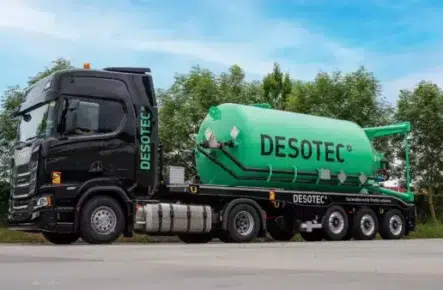
The Belgian group, specializing in mobile liquid and gas purification solutions, will establish the world’s largest activated carbon reactivation plant in Hauts-de-France. 150 jobs are expected to be created in the long term.
09-2026
Read more
Beck & Pollitzer France: Turnkey industrial installation and relocation
Interview

Beck & Pollitzer France: Turnkey industrial installation and relocation

Since its opportunistic arrival in the Hauts-de-France region at Toyota’s request in 1997, Beck & Pollitzer has become a leading player in the development and relocation of industrial sites. Learn about the British group’s 25-year presence in the region through the testimony of Fabrice Dezitter, Managing Director for Western Europe at Beck & Pollitzer France.
09-2026
Read more
Ecofrost is expanding into the Hauts-de-France Region to accelerate its growth
Agrifood
Interview

Ecofrost is expanding into the Hauts-de-France Region to accelerate its growth

Ecofrost has invested 240 M€ to transform a brownfield site into a factory dedicated to the production of frozen French fries in Péronne. The project is expected to create 150 jobs starting in 2026. Why did the Belgian group choose the Hauts-de-France region for its agri-food project? Matthieu Lenglet, Deputy CEO, reveals the criteria that guided this decision.
08-2026
Read more
Horiba: groundbreaking innovation in the Hauts-de-France region
Health
Article

Horiba: groundbreaking innovation in the Hauts-de-France region

Announced at Choose France 2026, the investment by HORIBA further solidifies the Loos site’s role as a global hub for industrial Raman spectroscopy technologies and positions the Hauts-de-France region as a leading center for smart analytical instrumentation.
08-2026
Read more
Octopus Energy accelerates its expansion from its base in the Hauts-de-France region
Interview

Octopus Energy accelerates its expansion from its base in the Hauts-de-France region

In less than two years, Octopus Energy has opened two additional sites in the Hauts-de-France region. Why did this British energy supplier choose Lille and Amiens as the launch pad for its expansion in France? We take a closer look at a location strategy that highlights the region’s strengths.
07-2026
Read more
Agrati: from industrial recovery to lasting success in Hauts-de-France
Industry
Article

Agrati: from industrial recovery to lasting success in Hauts-de-France

Agrati, a family-owned Italian company specializing in fastening solutions for the automotive industry, took over two struggling industrial sites specializing in fasteners in Vieux-Condé and Fourmies back in 2010. Fifteen years later, the group is continuing its regional expansion with a new €15 million investment program. This trajectory is a concrete illustration of why Hauts-de-France ranks among Europe’s most attractive […]
07-2026
Read more